Cost per tonne of CO2 captured is driven mostly by the concentration of the stream, so a near pure process vent and a turbine exhaust on the same site can differ by several times whichever technology is picked for the dilute one, and a capture cost quoted without naming its stream carries almost no information. A CCUS chain has three parts, capture, transport and storage, which usually sit with different owners, and the project only proceeds when all three reach a decision on compatible timing. A shared hub lowers unit cost and introduces sequencing risk, because the transport and storage backbone has to be sized against volumes individual emitters have not yet committed. Storage appraisal is the long pole in the schedule, since confirming a site takes seismic work and appraisal wells that run to years.
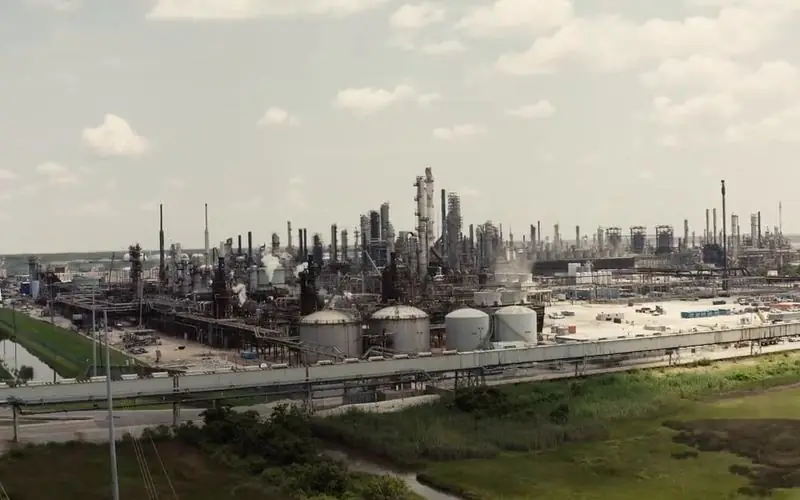
Take one industrial site with two capture opportunities on it. The first is the process vent from a chemical unit, where the gas leaving the reactor is almost pure CO2 because the process separates it as part of making the product. The second is the exhaust from the gas turbines that power the site, where CO2 sits at a few percent in a stream that is mostly nitrogen.
Same site, same engineering contractor, same solvent vendor if you want one. The cost per tonne captured differs by several times, and the ordering will not change whichever technology you select for the second stream.
That gap explains most of the confusion in this sector. A capture cost quoted without the stream it applies to is close to meaningless, and a great deal of comparison between projects is comparison between chemistry rather than between the companies doing the work.
Concentration is the dominant variable
The thermodynamics are not subtle. Separating a gas from a mixture takes work, and the work required rises steeply as the target gets more dilute. A stream that is already ninety-something percent CO2 needs dehydration and compression, both mature and comparatively cheap. A stream at four percent needs the CO2 chemically grabbed out of a large volume of gas that you have to move, cool, contact with solvent, and then heat again to release what you captured.
The IEA's 2021 assessment of capture costs put high purity sources, meaning ethanol fermentation, ammonia production and natural gas processing, at roughly 15 to 25 US dollars per tonne. Dilute industrial sources such as cement and iron and steel came out considerably higher, and direct air capture, which is the extreme case of dilution at around 400 parts per million, came out at roughly 130 to 345 dollars per tonne. The spread across that range is driven by how much gas you have to process per tonne of product recovered.
Typical concentrations are worth carrying in your head when screening a site. Gas turbine exhaust sits around four percent. Coal flue gas is in the low teens. A cement kiln is higher, because a large share of its CO2 comes from calcining limestone rather than from burning fuel. Blast furnace gas is higher again. Ammonia, ethylene oxide and natural gas sweetening produce streams that are nearly pure, because separation was already part of the process.
Two consequences follow for how a project gets screened.
The first is that the technology selection argument, which is where vendors compete and where a great deal of internal energy goes, operates on a smaller share of the total cost than the stream selection decision that precedes it. Choosing which stream to capture from is worth more than choosing what to capture it with.
The second is that captured tonnes and avoided tonnes are different quantities. Solvent regeneration needs heat, compression needs power, and both come from somewhere. If that energy comes from burning more fuel, the emissions from doing so offset part of what you captured, and the honest figure for a project is net of them. A project reporting captured volume without the energy penalty is reporting a gross number.
Three parts, three owners, one problem
A chain has capture, transport and storage. Each has a different cost structure, a different risk profile and usually a different owner, and the interfaces between them are where projects fail.
Capture sits at an industrial site, is financed by the emitter, and its cost is what the stream dictates. Transport is a pipeline or a shipping route, with economics dominated by scale: the engineering, right of way, surveys and crossings for a line cost a similar amount whether the line is sized for two million tonnes a year or fifteen, so the cost per tonne falls steeply as volume rises. Storage is a subsurface asset with an appraisal programme, an injection well count driven by geology, and a monitoring obligation that outlives the injection period by decades.
The coordination problem is visible as soon as you write those three down. The first emitter in a region cannot justify a pipeline sized for their volume alone, because the per tonne cost at that scale is prohibitive. A pipeline sized for the region's eventual volume needs somebody to pay for capacity that will sit empty for years. The storage operator needs to spend tens of millions on appraisal before anyone can commit to inject, and cannot recover that spend without committed volumes. No single project internalises the benefit of building the shared parts at the right size, which is the standard condition for infrastructure that does not get built without intervention.
This is why CCUS clusters up. It is also why the sector's progress tracks policy design more closely than it tracks technology.
The hub model and its sequencing risk
The hub model puts an anchor emitter with large committed volume onto a trunkline sized above their requirement, with storage developed against that anchor volume, and other emitters connecting later at a lower marginal cost than they could have achieved alone.
Governments have built mechanisms around this. The UK sequenced clusters in tranches from 2021 and chose to regulate transport and storage as a licensed activity with an allowed revenue, which is the standard treatment for a natural monopoly that has to build ahead of demand. The EU's Net-Zero Industry Act, in force from 2024, set a Union-wide objective of 50 million tonnes a year of injection capacity by 2030 and placed obligations on oil and gas producers to contribute to it. Both are answers to the same coordination failure.
The risk the hub model creates is sequencing. Everything depends on the anchor, and the anchor's schedule is now everybody's schedule. A delay in the anchor's capture plant leaves a trunkline and a storage site with no revenue and a financing structure that assumed otherwise. The later connectors, whose business cases were built on the shared infrastructure existing, have nothing to connect to.
Cross-chain risk is the term for what happens when one link fails and the others cannot operate. An emitter that cannot dispose of its CO2 has a capture plant it must either run into a vent or shut down, and it may still owe availability payments. A transport and storage operator with no volume still has fixed costs and debt service. Whoever bears the loss in each of those scenarios is the substance of the negotiation, and it is more consequential to a project's financing than the capture cost per tonne that gets debated in public.
The practical planning consequence is that the chain has one schedule rather than three. Treating the storage appraisal, the pipeline consent and the capture plant as separate projects with separate contingencies produces a plan where the arithmetic works and the sequence does not.
What storage appraisal does to the timeline
Subsurface storage carries genuine geological uncertainty, and the industry has borrowed its own vocabulary to describe it. The Society of Petroleum Engineers published a CO2 Storage Resources Management System in 2017 that classifies storage in ranges by confidence level, in the same spirit as petroleum reserves classification, precisely because a number produced before appraisal is a range rather than a figure.
Two properties get conflated and they behave differently. Capacity is how much the formation can eventually hold. Injectivity is how fast you can put CO2 into it. A site can have ample capacity and disappointing injectivity, which shows up as needing more wells than planned, or as pressure building faster than the model predicted, which limits the rate. Injectivity is the property that determines whether the site can accept the volume the capture plants will produce on the day they start, and it is the harder of the two to establish before you drill.
Establishing it takes seismic acquisition and interpretation, at least one appraisal well and usually more, an injection test, a dynamic model that has been history matched against the test rather than merely constructed, a permit, and a monitoring plan that regulators accept. That programme takes years and costs real money before a single tonne is stored, with an outcome that is not guaranteed.
The regulatory tail extends further. The EU's CCS directive from 2009 allows responsibility for a closed site to transfer to the member state after a minimum of twenty years, subject to evidence that the CO2 will remain permanently contained. In the US, the EPA's Class VI programme sets a default post-injection site care period of fifty years, adjustable on a site-specific basis, and permitting timelines have themselves been a constraint given how few states hold primacy for the programme.
For scheduling purposes, the conclusion is that storage is usually the critical path, and it is the part of the chain with the most dispersion in its completion date. A plan that puts capture construction on the critical path with storage treated as a parallel workstream has the risk profile backwards.
The revenue side, and how differently each source behaves
Three revenue sources dominate, and they carry different risk to a financier.
Compliance value. Under an emissions trading system that recognises permanent storage, capturing a tonne removes the obligation to surrender an allowance for it, so the revenue is the allowance price you no longer pay. That value is market-determined, moves daily, and has no floor. It is the most economically coherent of the three and the hardest to underwrite a twenty year investment against.
Tax incentives. The US Inflation Reduction Act of 2022 set the section 45Q credit at 85 dollars per tonne for capture into secure geological storage, 60 dollars for utilisation or enhanced oil recovery, and higher rates for direct air capture, over a twelve year credit period, with recapture provisions if the CO2 subsequently escapes. A fixed statutory figure is far easier to finance than a market price. The risks move to whether the project qualifies, whether the sponsor has the tax appetite or can transfer the credit, and whether the statute survives the asset.
Enhanced oil recovery. A CO2 purchaser pays for the molecule because it produces incremental oil, and those contracts have conventionally been indexed to the oil price. That makes the revenue line correlated with the commodity, which is familiar to an oil and gas balance sheet and unattractive to an infrastructure investor looking for uncorrelated cash flow. It also brings an accounting question about how much of the injected CO2 stays down and how the produced oil's emissions are treated, which affects whether the tonnes count under a given regime.
Most real projects combine at least two of these, and the combination matters more than the headline total. A project with a fixed credit covering the capture cost and a market-priced element covering the transport and storage margin has a different debt capacity than one with the same total revenue arranged the other way around.
The limit
These are assets with a design life measured in decades, financed against policy regimes that are younger than a single refinancing cycle and can be rewritten by an election. That mismatch is the central risk in CCUS, ahead of anything geological or technical.
The technical risks are all bounded and priceable. Capture plants take time to reach design availability, storage sites sometimes underperform their pre-drill estimate, pipelines cost more than the estimate. These have precedents, insurance products and contingency practice around them.
The policy risk has no equivalent instrument. A project whose economics depend on a credit at a stated value, a trading system with a floor, or an obligation on a third party to contribute capacity, is exposed to a decision made by people who are not party to the contract. The available mitigations are partial: contracts for difference with a sovereign counterparty, grandfathering provisions, credit transferability that widens the pool of parties with an interest in continuity, and pricing the residual in the discount rate rather than assuming it away. Where a project only works if the regime is assumed constant for twenty five years, that assumption deserves to be written on the front page of the investment paper rather than buried in the model.
Before the next technology conversation, rank every CO2 stream on your site by concentration and annual volume, and see which ones are already nearly pure.
More on this in energy on the DemandLabs platform.